Attitude · 4 min
A bed that withdraws
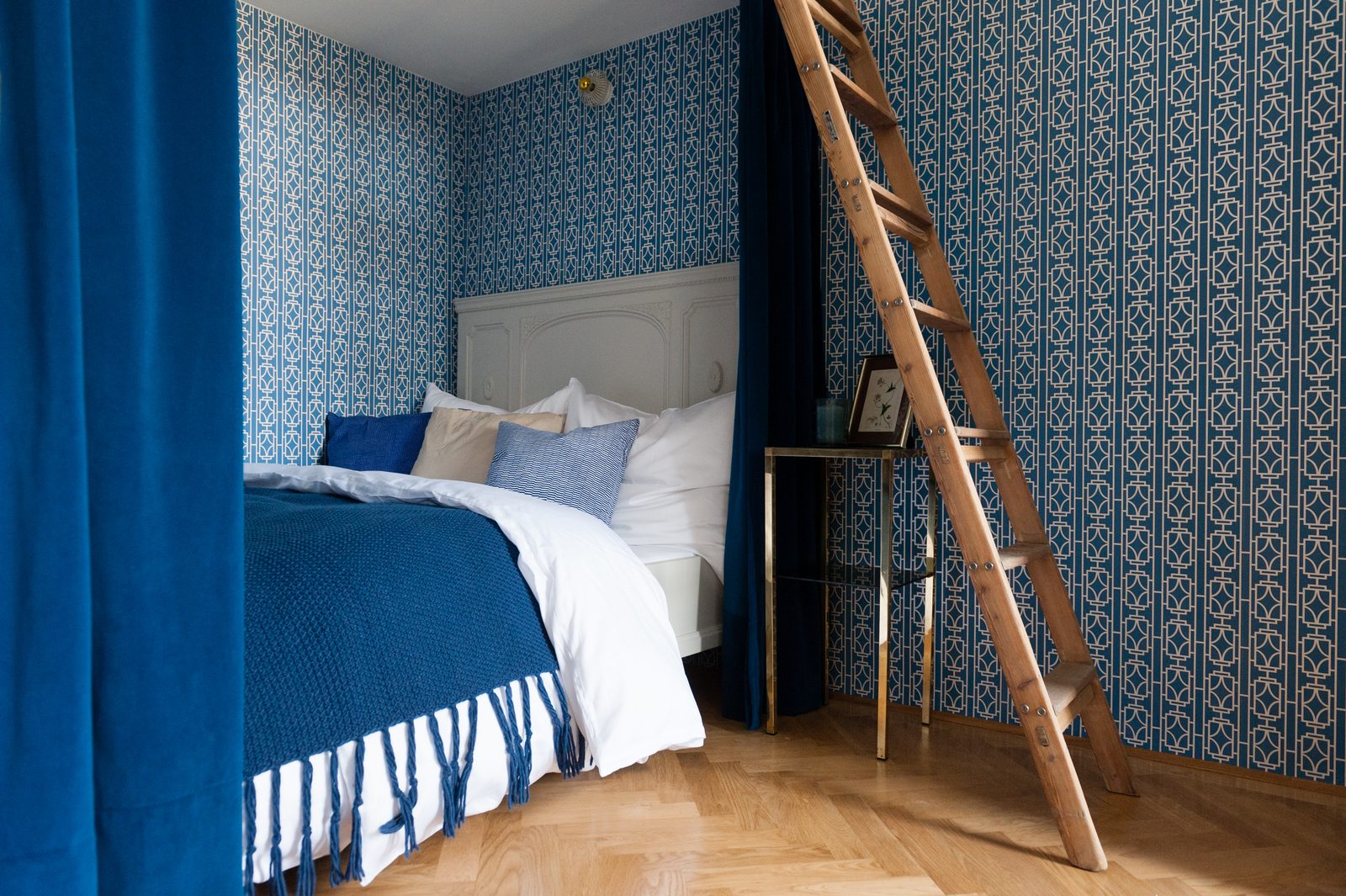
As a child I built caves out of blankets and chairs, a roof over my head that belonged to me alone. I think that longing never quite fades. To this day a sleeping alcove moves me more than the largest bedroom, because it promises the same thing, a room within a room to withdraw into.
Why the small shelters
A large room leaves you alone, an alcove holds you. The niche, the curtain, the low ceiling, all of it quietly says, here you are safe. Old farmhouse parlours had such bed-caves, warm behind the stove. What once arose from need I feel today as luxury, a place where the day truly ends.
The curtain as a wall
I like walls you can move. A heavy velvet curtain is such a wall, it opens the room in the morning and closes it at night. Fabric muffles sound and light, it turns a corner into a chamber. You need not many square metres to build a sense of shelter, you need only the right textile in the right place.
Dreaming upward
And then the ladder that leads up. There is something deeply childlike in climbing to sleep, high under the ceiling, towards the stars. I think good rooms may allow such a thing, a little adventure, a little retreat. In the end we all seek the same thing, a roof over our heads that feels as if we built it ourselves.
Frequently asked
What is a sleeping alcove?
A bed in a niche, often with a curtain, that can be separated from the rest of the room. An old way of building that creates shelter on little space.
Why do small sleeping niches feel so cosy?
Because the tight, enclosed form signals protection. A low ceiling, a curtain and soft materials muffle light and sound and let the day come to rest.
How do you create shelter on little space?
With clear niches, heavy textiles and warm materials. A curtain instead of a wall, a ladder instead of a staircase, that is often enough.